
Play’n GO CA: casino games provider review



Recommended Casinos Play’n GO


Play’n GO is a Swedish B2B iGaming content provider founded in 1997, widely recognised as one of the leading slot suppliers across regulated markets in Europe and North America, including Canada.
The company remains privately owned and does not disclose full financial statements. Industry estimates place its revenue at approximately €85 million in 2025, with a workforce of over 600 employees.
Its core market position is centred on slot development, accounting for roughly 5% of the global iGaming supplier market. A key limitation is the lack of diversification into Live Casino and adjacent verticals, positioning Play’n GO as a highly specialised content provider.
Operationally, the company focuses exclusively on regulated jurisdictions (including UKGC, MGA, GGL, and AGCO/iGaming Ontario), prioritising long-term B2B partnerships and compliant content distribution. This approach reinforces Play’n GO’s reputation as a reliable partner for licensed operators, although it limits expansion into grey or unregulated markets.
Top Canadian Casinos with Play’n GO Slots in 2026
Play’n GO distributes its content through direct integrations with major operators and aggregators, ensuring broad coverage across regulated markets, including Canada.
Key partnerships include international operators such as Bet365 and LeoVegas, where Play’n GO titles consistently rank among top-performing slots. Aggregator distribution via SoftSwiss also supports scaling across a wide network of platforms.
In Canada, Play’n GO has established a strong presence in Ontario’s regulated iGaming market through integrations with licensed operators under the iGaming Ontario (iGO) framework. This ensures compliance with local regulatory requirements and availability on provincially approved platforms.
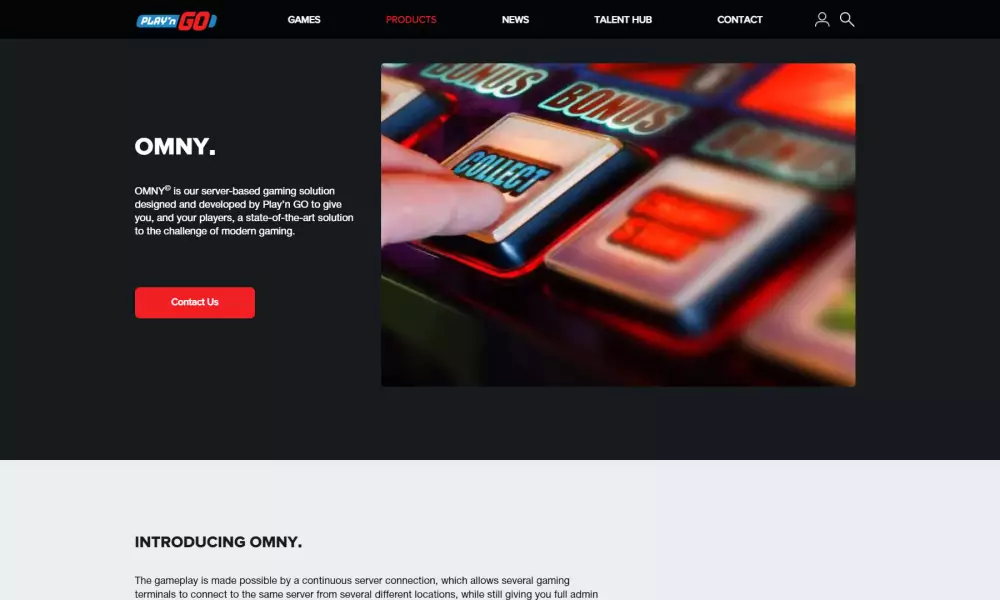
Technically, integrations are delivered via the OMNY platform API, which acts as a unified content delivery layer.


New Play’n GO casino 2026 (Canadian)










Why Canadian Players Choose Play’n GO Slots
Play’n GO maintains a strong industry position благодаря high-quality content and a consistent development approach focused on long-lifecycle slot experiences.
The portfolio includes over 350 games, primarily built around bonus-driven mechanics such as free spins, expanding features, and cascading wins. The company follows a steady release schedule, ensuring continuous updates to its game library.
A key competitive advantage is the development of proprietary game franchises that evolve into series rather than standalone titles, supporting long-term player engagement.
Mobile optimisation remains a core strength, with all titles developed in HTML5 to ensure consistent performance across desktop and mobile devices.
Who Are Play’n GO Slots Suitable For?
Play’n GO content is best suited for players who prefer high-volatility slot mechanics with bonus-driven gameplay.
The typical experience involves longer base-game sessions combined with less frequent but higher-impact wins.
This portfolio may appeal to players who enjoy:
- high-volatility slots
- feature-rich gameplay
- mobile-first gaming experiences
- traditional RNG-based casino games (without live dealer formats)
Play’n GO does not focus on live casino products or low-volatility, fast-cycle gameplay, which may be a consideration depending on player preferences.
Popular Play’n GO Slots in Canada
Top 5 Play’n GO games based on popularity and aggregator rankings:
| Game Title | RTP (%) | Volatility | Max Win | Features | Status |
| Book of Dead | 96.21 | High | 5,000x | Expanding Symbols, Free Spins, Wilde Series | Active |
| Reactoonz | 96.51 | High | 4,570x | Cluster Pays, Gargantoon, Quantum Leap | Active |
| Legacy of Dead | 96.58 | High | 5,000x | 9 Expanding Symbols, Free Spins | Active |
| Moon Princess | 96.50 | High | 5,000x | Cluster Pays, Girl Power, Free Spins | Active |
| Rise of Olympus | 96.50 | High | 5,000x | Cluster Pays, Hand of God, Wrath of Olympus | Active |
All RTP values are sourced from official documentation and certified by GLI. Reduced RTP configurations apply to the UK market (e.g., 94.21% for Book of Dead and 94.51% for Reactoonz).
-
 Moon PrincessPlay’n GO
 -
 Prissy PrincessPlay’n GO
 -
 Planet FortunePlay’n GO
 -
 ReactoonzPlay’n GO
 -
 Viking RunecraftPlay’n GO
 -
 MatsuriPlay’n GO
 -
 Sails of GoldPlay’n GO
 -
 Merry XmasPlay’n GO
 -
 Wild Blood 2Play’n GO
 -
 Sweet AlchemyPlay’n GO
 -
 Sea HunterPlay’n GO
 -
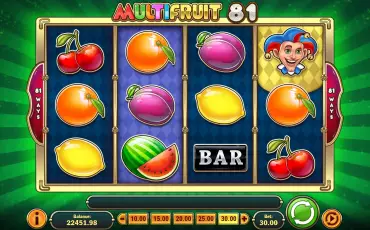 MultiFruit 81Play’n GO
 -
 Ortaköyün Yaramazi (Village Kid)Play’n GO
 -
 Happy HalloweenPlay’n GO
 -
 HugoPlay’n GO


New Play’n GO Slots Canada 2026
-
 Sails of RichesPlay’n GO
 -
 3 Blades & BlessingPlay’n GO
 -
 Piggy Blitz Casino GoldPlay’n GO
 -
 Mandalay Bay RichesPlay’n GO
 -
 Mega Don Triple ThreatPlay’n GO
 -
 Mole DiggerPlay’n GO
 -
 Legacy of Undead Dragon AbysswaysPlay’n GO
 -
 Bubblin’ RichesPlay’n GO
 -
 Stadium of RichesPlay’n GO
 -
 Static Nightmare AbysswaysPlay’n GO
 -
 Lab of Madness - It's a Wild!Play’n GO
 -
 Rise of Olympus ExtremePlay’n GO


Table Games by Play’n GO
The table games segment plays a supporting role within Play’n GO’s portfolio, covering core casino categories such as roulette, blackjack, baccarat, and craps.
These are primarily RNG-based implementations of classic rules, with limited product differentiation. The main value lies in stability, a consistent interface, and compliance with operator requirements rather than innovation.
Within the overall portfolio structure, table games are not a strategic focus and mainly complement the slot ecosystem.
Roulette by Play’n GO
The roulette offering is built around a classic format, with a clear focus on the European model (single zero), which results in the standard house edge of around 2.7%. The core product is essentially a European Roulette Pro–level version, featuring the familiar betting options along with additional tools like racetrack and call bets.
Overall, it feels like a very “clean” implementation with no unnecessary complexity: the interface is user-friendly, statistics (hot/cold numbers) are included, but the overall variety is limited and there are very few alternative formats. Some versions may include rules like La Partage, but these are more minor variations within the same concept rather than a fully developed product line.
From an aggregator perspective, the product sits slightly above average in terms of UX, but remains basic in functionality: it runs reliably and supports classic strategies, yet doesn’t introduce unique mechanics or a broader format selection.


Blackjack by Play’n GO
Blackjack is the most developed segment within the provider’s table games portfolio. The lineup includes several variations (classic, European, multi-hand, Double Exposure), giving players more flexibility compared to other categories.
The key strength is the focus on multi-hand gameplay and traditional rules, allowing RTP to reach 99%+ with optimal strategy. This makes the games particularly appealing to more experienced players who prioritize math over visuals.
At the same time, the product remains conservative both visually and conceptually: there are no hybrid formats or gamification layers seen in some competitors. As a result, Play’n GO blackjack is perceived as a reliable and functional tool, rather than an attempt to reinvent the genre.


Baccarat by Play’n GO
Baccarat is presented in a simplified format (Mini Baccarat / Pro versions) and closely follows the classic model without deviations. Players get access to standard bets (Banker, Player, Tie), with RTP remaining within the typical range for the genre (Banker offering the best odds).
The focus is on usability: fast-paced gameplay, a minimalistic interface, and occasional visual elements like “squeeze” animations to enhance engagement. Beyond that, differentiation is minimal — both in terms of depth and variation.
In the end, baccarat here is a purely utilitarian product: it does its job well but doesn’t contribute to any meaningful competitive edge for the provider.
Craps by Play’n GO
Craps is a relatively new addition to the Play’n GO portfolio, introduced as part of the expansion of the table games segment. Initially, it launched as a classic version with customizable table styles and immersive elements (animated dealer, audio), aiming to replicate the land-based casino experience.
This later evolved into GO Craps (2025) — a mobile gameplay version with a simplified interface and a stronger focus on accessibility. The game retains the core structure (Come Out / Point phases, Pass Line, Don’t Pass, and additional bet types), but streamlines the interaction, adds clearer visual feedback, and includes basic stat tracking.
From a positioning standpoint, this is an important addition: craps fills one of the remaining gaps in the portfolio, but still remains a niche product. Even with GO Craps, the segment currently feels more like a portfolio extension rather than a fully developed strategic direction.
Game Mathematics & Features
Play’n GO builds its mathematical model around high-volatility slots, where the win potential is strongly tied to bonus features rather than the base gameplay. Across most titles, RTP typically falls within the ~94–97% range, with the majority of return concentrated in free spins, multipliers, and extended game mechanics.
A defining characteristic of the portfolio is its focus on a high-volatility model, with infrequent but potentially large payouts. This creates a distinct gameplay cycle: extended base-game sessions followed by payout peaks triggered by bonus features.
Core architecture: Grid Slots and Cluster Pays
At the foundation of Play’n GO’s math design is the Grid Slots system — a departure from traditional paylines in favor of grid-based layouts (most commonly 5x5 or variable configurations), where wins are formed through clusters of matching symbols.
This is paired with the Cluster Pays mechanic, where a win is triggered by groups of 5+ identical symbols. Once a win is activated, a cascading system takes over: winning symbols are removed and new ones drop from above, creating chains of consecutive payouts.
This model underpins titles like Reactoonz, Moon Princess, and Rise of Olympus, establishing a recognizable mathematical identity for the provider.
Signature bonus mechanics
On top of the core grid architecture, Play’n GO layers in proprietary bonus systems that enhance the overall math depth:
- Expanding Symbols (Book of Dead series) — during free spins, a symbol can expand to fill an entire reel, creating multiple simultaneous wins
- Quantum Leap / Meter systems (Rise of Olympus) — progression-based mechanics where wins fill meters that unlock enhanced bonus features
- Cascading bonus structures, which form the backbone of most high-volatility releases
Modern extensions of the model
In newer releases, the company increases variability through more advanced mathematical systems:
- Gargantoon (Reactoonz) — a transforming wild feature that alters the grid structure and amplifies cascade potential
- Blitzways (2025) — a dynamic reel system with variable ways to win (up to 16,807), creating a unique configuration on every spin
RTP & Volatility
Play’n GO’s RTP and volatility distribution reflects a consistent product philosophy centered on high-volatility gameplay.
Rather than focusing purely on RTP percentages, the key factor is how RTP is structured — with most of the return embedded in bonus features rather than base spins.
High volatility dominates the portfolio, creating a gameplay experience defined by rare but potentially large wins. Medium-volatility titles exist mainly to balance the portfolio, while low-volatility games are not a strategic focus.
Maximum Win Potential
Maximum win potential typically ranges between 2,000x and 5,000x, aligning with standard high-volatility slot models.
Some branded or advanced titles exceed this range, reaching up to 30,000x–50,000x, although these are not representative of the core portfolio.
Bonus Buy Feature
Play’n GO does not offer a Bonus Buy feature in any of its games. All bonus rounds must be triggered through standard gameplay mechanics.
Best Play’n GO bonuses in Canada
-
 Free €5 Bonus for Registering at SlottyWay Casino5 €max. amountx75Wager
 -
 Welcome Bonuses and Free Spins at 1xBet Casino200%Bonus1 500 $max. amountx35Wager
 -
 Huge High Roller Bonuses at Cat Casino100%Bonus25 000 $max. amountx35Wager
 -
 A 100% Welcome Bonus of up to 1000 Euros at Joo Casino100%Bonus1 000 €max. amountx50Wager
 -
 100% Welcome Bonus of up to 250 Euros at Spark Casino.100%Bonus250 €max. amountx45Wager
 -
 200% Welcome Bonus up to $2000 at Bitz casino200%Bonus2 000 $max. amountx45Wager




Jackpots & Bonus Features
Play'n GO specializes in fixed jackpots with predefined values, rather than network progressive jackpots, unlike competitors Playtech and NetEnt. The company focuses on in-game bonus mechanics, delivering high win potential without relying on accumulated prize pools. Fixed jackpots are available in games such as Cat Wilde and the Pyramids of Dead, Bell of Fortune, Speed Cash, and Golden Goal, with predefined values set according to each game's rules. The new GO Collect mechanic (2026), introduced in Book of Dead GO Collect, adds a collection system based on Gold Staters to activate the Treasure Vault Respin bonus feature.
| System | Type | Levels | Seed | Contribution |
| Fixed Jackpots | Fixed | Predefined | Predefined values | Defined by game rules |
| Treasure Vault (GO Collect) | Feature | Collection | Gold Staters | Scatter symbols |
Maximum wins in key titles include: Book of Dead — 5,000x at RTP 96.21%, Reactoonz — 4,570x at RTP 96.51%, KISS Reels of Rock — 50,000x at RTP 96.20%, Ronin's Honour — 30,000x at RTP 96.22%, Aztec Idols — 22,275x at RTP 96.65%. High win potential is achieved through Wild multipliers, cascading wins, and bonus features rather than progressive jackpots.
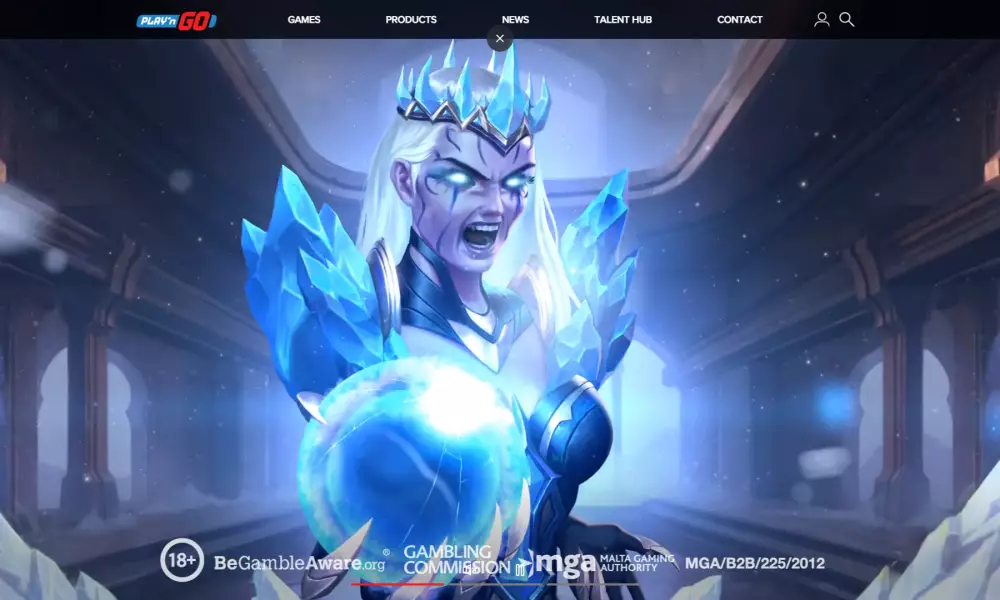
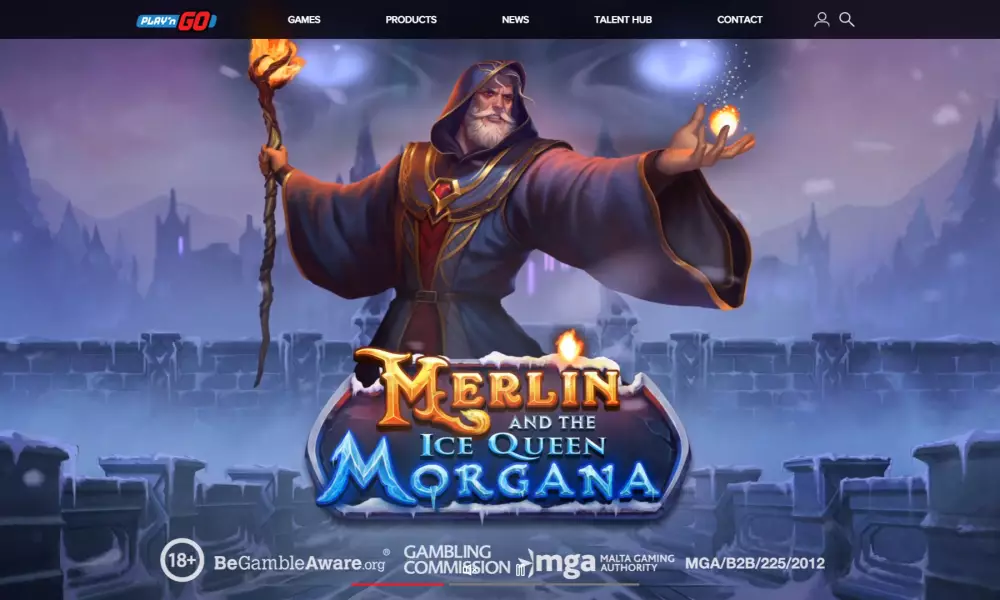
Play’n GO Official Site (Canada)
Company Background
Play’n GO development timeline:
- 1997 — Company founded in Växjö, Sweden
- 2004 — Transition to full independence and brand development
- 2005 — First mobile games released (pre-smartphone era)
- 2012 — Malta Gaming Authority license obtained
- 2013 — Release of Energoonz, the first Grid Slot
- 2016 — Launch of Book of Dead; UKGC license obtained
- 2017 — Release of Reactoonz and Moon Princess
- 2018 — Launch of Rise of Olympus; expansion into Italy
- 2019 — First branded game (Sabaton)
- 2020 — Reactoonz 2, Legacy of Dead; SoftSwiss partnership
- 2021 — Expansion into Greece and Argentina; KISS Reels of Rock
- 2022 — Ontario license (AGCO/iGO); North America expansion
- 2023 — Entry into multiple US states; Haas F1 partnership
- 2024 — EGR Italy Award; expansion into South Africa
- 2025 — 20-year milestone; launch of Blitzways and CrashBack
- 2026 — Release of Book of Dead GO Collect
Business & Financial Performance
Play'n GO has demonstrated steady financial growth over the past decade, with an average annual revenue growth rate of around 20%. The company remains privately owned and does not disclose detailed financial reporting; however, industry estimates provide insight into its scale. According to iGaming Business, Play'n GO holds approximately a 5% market share, placing it among the top 5 global gaming software providers. The workforce has grown from 150 employees in 2016 to over 600 in 2025, reflecting operational expansion. Annual game releases have increased from 24 in 2016 to 60 in 2025, alongside expansion from 12 to more than 30 jurisdictions.
| Year | Revenue | Growth % | Employees | New Games | Markets |
| 2016 | €15M | - | 150 | 24 | 12 |
| 2017 | €20M | 33% | 200 | 28 | 15 |
| 2018 | €28M | 40% | 250 | 32 | 18 |
| 2019 | €35M | 25% | 300 | 36 | 20 |
| 2020 | €42M | 20% | 350 | 40 | 22 |
| 2021 | €50M | 19% | 400 | 44 | 25 |
| 2022 | €58M | 16% | 450 | 48 | 27 |
| 2023 | €65M | 12% | 500 | 52 | 28 |
| 2024 | €75M | 15% | 550 | 56 | 30 |
| 2025 | €85M | 13% | 600+ | 60 | 30+ |
Market position: top-5 global slot provider, leader in the Grid Slots segment, with a strong presence in regulated European markets and ongoing expansion in North America.
Ownership & Management
Play’n GO is a privately held company with no public shareholder structure, allowing it to maintain centralized decision-making and a long-term product strategy.
Key leadership is concentrated among the co-founders: CEO Johan Törnqvist and CMO Ebba Arnred, who oversee overall business development and brand strategy.
The commercial division is led by Magnus Olsson, responsible for global scaling and partnerships.
Financial Results
Play’n GO’s financial trajectory reflects a transition from rapid growth to a more mature, scalable business model. The fastest expansion occurred between 2017 and 2018, when the company strengthened its international presence and secured several key product hits, accelerating commercial growth.
After 2020, revenue growth became more stable, which is typical for an established provider with strong positions in regulated markets. During this period, growth was driven primarily by portfolio expansion and entry into new jurisdictions rather than one-off sales spikes.
Overall, Play’n GO demonstrates steady, predictable growth without sharp fluctuations, consistently scaling its portfolio and geographic reach while reinforcing its position among leading B2B iGaming content providers.
Expansion into New Markets
Play’n GO follows a regulated-first expansion strategy, entering only licensed markets and avoiding unregulated jurisdictions. The core foundation of its expansion is in Europe, supported by key licenses such as MGA, UKGC, and other local regulators (Italy, Spain, Germany, the Netherlands, and Scandinavia).
Since 2021, the company has increased its focus on North America—primarily through Ontario (Canada) and gradual expansion into selected U.S. states. At the same time, it has been developing its LATAM presence (Colombia, Argentina) and expanding in Asia via the licensed Philippine market.
As a result, Play’n GO has built a broad yet strictly regulated geographic footprint, where growth is driven by long-term positioning in key licensed jurisdictions rather than mass-market expansion.
Mergers & Partnerships
Play’n GO does not engage in major M&A activity and remains an independent private provider without integration into larger gaming holdings. Its growth is driven organically rather than through acquisitions.
Expansion is achieved through B2B partnerships with operators and aggregators, particularly in regulated markets across Europe and North America. This approach enables scalable distribution without altering ownership structure or corporate strategy.
Growth Strategy
Play’n GO’s growth is based on a content-driven model, with the primary driver being a consistent release schedule of new slots—averaging around 50–60 titles per year (approximately 4–6 games per month) in recent years. This pace ensures steady portfolio expansion without abrupt product shifts.
A key element of the strategy is the evolution of existing mechanics rather than replacing them. The company continuously enhances core slot systems—bonus rounds, cascading wins, expanding mechanics, and multipliers—adding new layers of complexity and variation within familiar frameworks. This reduces product risk and extends the lifecycle of its games.
Additionally, Play’n GO focuses on incremental improvements to the player experience, expanding bonus scenarios and win modifiers without altering the fundamental structure of its slots. This results in a stable product model built around predictability and long-term player retention.
Team & Offices
Play’n GO operates with a distributed structure, with its main operational hubs located in Europe. Core development and management functions are based in Sweden, forming the company’s product and technical foundation. Additional offices and teams across various European jurisdictions support commercial operations and regulatory compliance.
Organizationally, the company is structured around key functions: game development, mathematics and analytics, commercial partnerships and regional sales, as well as brand and communications. This setup enables Play’n GO to maintain a high release cadence while adapting its content to the requirements of different markets.
Licenses & Player Protection
Play’n GO holds one of the most comprehensive licensing portfolios in the industry, providing access to key regulated markets. The company complies with responsible gaming and data protection requirements across all target jurisdictions.
Licenses by jurisdiction:
- Malta (MGA) — license MGA/B2B/225/2012, issued on August 1, 2012, status: Active. Core European license for B2B services.
- United Kingdom (UKGC) — license 55949, obtained in August 2018, status: Active. Requirements: ID verification, database checks, Bonus Buy restrictions, 2.5-second spin speed.
- Gibraltar — license RGL No. 131, issued on March 22, 2022, status: Active.
- Romania (ONJN) — license L1160659W000326, Class II License, active since 2016.
- Belgium — license B+2387, License F1, active since 2015.
- Greece (HGC) — license HGC-0001, Type A License, active since 2021.
- Canada (Ontario, AGCO / iGaming Ontario) — Play’n GO is approved for distribution within Ontario’s regulated iGaming market, ensuring compliance with provincial standards for player protection, game fairness, and responsible gambling.
- Philippines (PAGCOR) — license PAG-001, POGO License, active since 2019.
RNG certification and game testing:
- Gaming Laboratories International — certification of RNG, mathematical models, and technical compliance
- BMM Testlabs — independent fairness testing
- Quinel — RNG verification and standards compliance
- ISO 27001 — information security management certification
Security measures: SSL/TLS data encryption, hosting on AWS servers in the EU (Frankfurt) for GDPR compliance, DDoS protection, and user data deletion upon request. Compliance with GDPR, UK GDPR, and CCPA has been audit-verified. No data breach incidents have been reported.
Responsible gaming tools are aligned with Canadian regulatory expectations and include: Reality Check, session limits, self-exclusion, deposit limits, and full KYC verification.
Awards & Industry Recognition
Play’n GO consistently receives industry recognition for product quality, innovation, and contribution to the sector:
- 2024 — Software Supplier of the Year, EGR Italy Awards (Best software provider in Italy)
- 2024 — Slot Supplier of the Year, 5 Star Media Awards (second consecutive year)
- 2024 — RNG Casino Supplier of the Year, 5 Star Media Awards
- 2024 — Game Studio of the Year (Large), SlotCatalog / SBC (second consecutive year)
- 2024 — Game Music / Soundtrack, SBC Game Developer Awards (for Hugo Legacy)
- 2024 — Top 20 Award, 5 Star Media Awards — Ebba Arnred (CMO & Co-Founder)
- 2024 — Top 20 Award, 5 Star Media Awards — Stuart Trigwell (Director of Business Development)
- 2024 — Top 20 Award, 5 Star Media Awards — Andrew Pink (Head of Brand)
- 2024 — MGA ESG-C Seal — award for ESG initiatives
- 2023 — Slot Provider of the Year, EGR Awards
- 2023 — Mobile Supplier of the Year, EGR Awards
- 2023 — Game of the Year, EGR Awards
Top3 Play’n GO casinos
New Play’n GO bonuses 2026
-
 Up to 250 USDT on your first deposit at Livecasino50%Bonus250 $max. amountx15Wager
 -
 Welcome package at Vulkan Vegas: up to €1,500 + 150 FS150%Bonus1 500 $max. amountx40Wager
 -
 Up to 7000 USDT and 260 free spins on your first three deposits at Weiss125%Bonus7 000 $max. amountx40Wager
 -
 100% on your first deposit up to 1 BTC at Cryptorino Casino100%Bonus61 000 €max. amountx66Wager
 -
 Welcome bonus up to 1 BTC on your first deposit at Betpanda100%Bonus60 000 €max. amountx80Wager
 -
 Welcome pack: up to 1,500 USDT with reduced wager at Bitcasino50%Bonus1 500 $max. amountx25Wager




Alternative providers


































Technology & Mobile Experience
Play’n GO is a technology leader in the industry, with full HTML5 optimisation across its entire portfolio, ensuring cross-platform compatibility. Its proprietary OMNY® platform (launched in 2015) enables seamless synchronisation of game progress across devices—desktop, mobile phones, tablets, and even land-based terminals.
The company was an early pioneer of mobile gambling, releasing its first mobile games as early as 2005, pre-smartphone era. All games are tested on iOS and Android devices, achieving internal UX/UI mobile performance scores of 5.0/5.0.
The technology stack includes HTML5, JavaScript, and WebGL for graphics, with backend infrastructure hosted on AWS (EU – Frankfurt) to ensure GDPR compliance.
Patents and proprietary technologies:
- CrashBack™ Mechanic (2025, Patent Pending) — re-entry mechanic for crash games
- Blitzways™ Mechanic (2025, Patent Pending) — dynamic reels with up to 16,807 ways to win
- Grid Slot Technology (2013, Protected) — grid-based slot architecture
- OMNY® Platform (2015, Protected) — cross-platform synchronisation
- Quantum Leap System (2017, Protected) — meter-based bonus system
- FuseWays (2024, Patent Pending) — closed-loop mechanics
Security certifications include ISO 27001 for information security management. All games are tested by independent labs (GLI, BMM Testlabs, Quinel) for RNG fairness and regulatory compliance.
API integration is handled via the OMNY Game Server API (v2.1), using secure API key authentication with a rate limit of up to 1,000 requests per minute.
Final Verdict
Play’n GO demonstrates stable, long-term growth, with continued expansion in North America, particularly within regulated markets such as Ontario.
The company maintains a strong position in the Grid Slots segment while gradually introducing new mechanics and formats.
Key strengths include:
- proprietary game mechanics
- strong mobile optimisation
- consistent performance in regulated markets
- established reputation among licensed operators
Casinoz recommendation: Play’n GO is a reliable provider for players who value structured gameplay, high-quality design, and a mathematically balanced slot experience. It is particularly well-suited for fans of high-volatility slots and feature-driven mechanics.
Frequently asked questions
Play’n GO is a B2B iGaming software provider specialising in the development of online casino content, including video slots, Grid Slots, table games, and video bingo. The company’s portfolio includes over 350 titles, with regular new releases designed primarily for regulated markets across Europe and North America, including Ontario, Canada.
Some of the most widely recognised Play’n GO titles include Book of Dead, Reactoonz, Legacy of Dead, Moon Princess, and Rise of Olympus. Book of Dead is one of the provider’s flagship releases and remains a frequently featured title across regulated online casino platforms. Many of these games have also evolved into long-running series, such as the Wilde Series.
Play’n GO operates under licences issued by major regulatory authorities, including the Malta Gaming Authority (MGA), the UK Gambling Commission (UKGC), Gibraltar regulatory bodies, and iGaming Ontario (iGO), operating under the Alcohol and Gaming Commission of Ontario (AGCO) framework. All games are independently tested and certified by recognised laboratories such as Gaming Laboratories International (GLI), BMM Testlabs, and Quinel to ensure fairness and technical compliance. The company also follows established responsible gaming and data protection standards across all regulated jurisdictions in which it operates.
Return to Player (RTP) across Play’n GO titles generally falls within the 94%–97% range, depending on the game and jurisdiction. Most popular titles are positioned above 96%, including examples such as Book of Dead (96.21%) and Reactoonz (96.51%). It should be noted that RTP values may vary depending on regulatory requirements and operator configurations in different markets, including Ontario.
Yes. All Play’n GO games are developed using HTML5 technology and are fully optimised for mobile play across smartphones, tablets, and desktop devices. The OMNY® platform supports consistent gameplay experiences across devices, allowing players to access games without requiring additional downloads or software installation.
Play’n GO operates under multiple gaming licences across regulated jurisdictions, including: Malta Gaming Authority (MGA), UK Gambling Commission (UKGC), Gibraltar regulatory framework, Belgium Gaming Commission, Hellenic Gaming Commission (Greece), iGaming Ontario (iGO), under AGCO oversight (Canada), other regulated European and international markets. The company’s content is available only in regulated jurisdictions where online casino gaming is permitted.
Play’n GO games are integrated via the OMNY Game Server API (v2.1), using secure API key authentication. Integration timelines vary depending on operator infrastructure but typically range between 5–7 weeks. Commercial and technical conditions, including revenue share models, are agreed individually with operators. Full technical documentation is provided to licensed partners through the official developer portal.
Play’n GO primarily focuses on fixed jackpot systems rather than network-wide progressive jackpots. Instead of pooled prize structures, high win potential is generated through in-game mechanics such as multipliers, free spins, and feature-based bonus rounds. Examples of games with fixed jackpot-style structures include Cat Wilde and the Pyramids of Dead and Bell of Fortune.
Play’n GO has developed a range of branded and music-themed slots featuring internationally recognised artists, including KISS, Alice Cooper, Sabaton, Def Leppard, and ZZ Top. These titles combine licensed branding with standard Play’n GO gameplay mechanics and are designed for regulated casino markets.
Blitzways is a proprietary game mechanic introduced in 2025. It features dynamic reel structures that can change on each spin, offering up to 16,807 ways to win when fully expanded. The mechanic is typically combined with cluster-based gameplay systems to increase variability and feature frequency.
CrashBack is a patented mechanic used in Play’n GO crash-style games. It allows players to re-enter a round after cashing out by reinvesting previously secured winnings into the same session. This feature is designed to add flexibility and extended engagement within crash game formats.
Play’n GO content is available exclusively in regulated markets across more than 30 jurisdictions. These include the United Kingdom, Malta, Sweden, Germany, Italy, Spain, the Netherlands, Denmark, Belgium, Greece, Romania, Ontario (Canada), selected regulated jurisdictions in the United States, Colombia, Argentina, the Philippines, and South Africa. Availability depends on local licensing frameworks and operator agreements.
Play’n GO can be contacted via its official business email: marketing@playngo.com. The company is headquartered in Malta and operates additional offices across Europe to support regulated market operations.
Demo versions of Play’n GO games are available through licensed casino platforms, aggregator sites, and approved game preview environments. Players can typically access free-play versions without registration on operator websites that support demo mode functionality.
Play’n GO integrates responsible gaming tools in line with regulatory requirements across its licensed markets. These include Reality Check notifications, session time reminders, deposit limits, self-exclusion options, and mandatory KYC verification processes where required. The company’s approach aligns with responsible gambling frameworks established in jurisdictions such as Ontario (AGCO/iGO), the UK, and the EU.
- Iconic flagship title Book of Dead — one of the most recognizable slots globally
- Innovative mechanics such as Grid Slots and Cluster Pays
- Full mobile optimization across the entire portfolio (HTML5)
- Consistent release schedule — 50+ new games annually
- Multiple industry awards and recognitions
- Transparent RTP range (typically 94%–97%), certified by independent testing labs
- Strong presence in regulated markets (including Ontario’s iGaming market under AGCO / iGaming Ontario framework)
- No Live Casino products
- No network progressive jackpots
- High volatility may not suit conservative players
- Reduced RTP configurations in the UK market

To leave a comment, you must log in:


| Information | |
| Website | https://www.playngo.com/ |
| Site languages | English |
| Foundation date | 1997 |
| Downloadable version | No |
| Flash version | Yes |
| Mobile version | Yes |
| Live version | No |
| Casinos using the software | 197 |
| Blacklisted casinos | 37 |
| Closed casinos | 2 |
| Jurisdiction | Malta, United Kingdom, Alderney |
| Auditors | Gaming Laboratories International, LLC, BMM Testlabs |
| Contact details | |
| Post address | Industrigatan 9, Växjö, SE-352 36, SE |
-
7.6
-
8
-
7.8
-
9.8
-
7.5
-
7.4
-
8
-
6.9
-
8.7
-
6.4